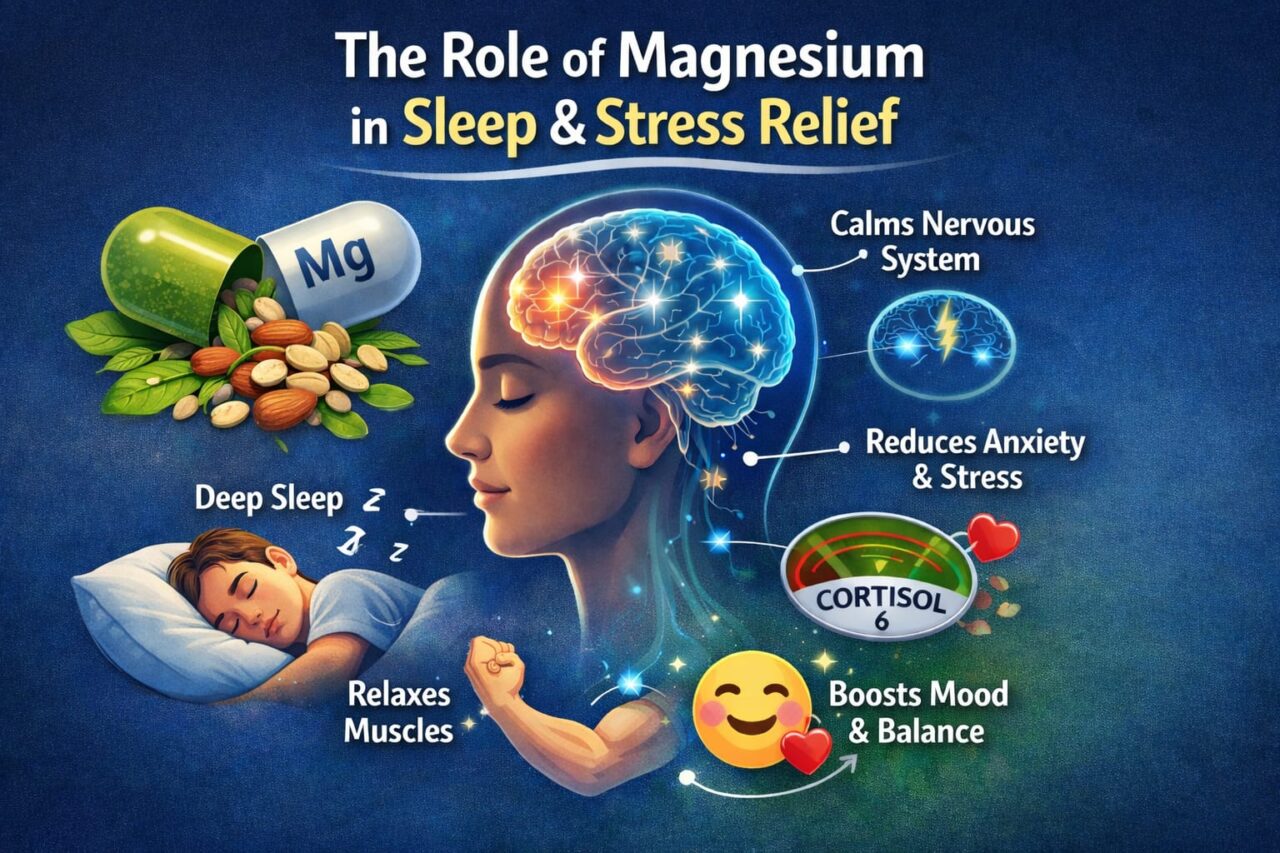
Benefits of magnesium go far beyond supporting bones and muscles – this essential mineral plays a powerful role in improving sleep quality and managing stress levels.
In today’s fast-paced world, poor sleep and chronic stress have become common health concerns affecting millions of people worldwide. Work pressure, constant screen exposure, anxiety, and unhealthy lifestyles often disrupt the body’s natural balance, leading to fatigue, insomnia, and emotional burnout. Amid this growing crisis, magnesium, an essential mineral, is gaining scientific attention for its calming and restorative effects.
The role of magnesium in promoting sleep and reducing stress is supported by strong scientific evidence. Magnesium plays a crucial role in regulating the nervous system, calming the mind, relaxing the muscles, and supporting healthy sleep cycles. Yet many people are unaware of their deficiency in this vital mineral.
In this article, we will explore five science-proven benefits of magnesium for sleep and stress relief, its mechanism of action in the body, natural food sources, and how you can safely incorporate it into your daily routine for improved mental and physical well-being.
Table of Contents
What is Magnesium and Why is it Important?
Magnesium is an essential mineral involved in over 300 biochemical reactions in the human body. It supports nerve function, muscle relaxation, hormone balance, energy production, and brain health.
Despite its importance, studies suggest that a large percentage of adults do not meet their daily magnesium requirements due to poor diet, stress, and processed foods. The role of magnesium in sleep and stress relief is backed by scientific research and clinical studies.
Benefits of Magnesium
1. Magnesium Helps Calm the Nervous System
One of the most powerful benefits of magnesium is its ability to calm the nervous system. Magnesium regulates neurotransmitters – the chemical messengers that send signals between the brain and body.
It helps activate GABA (gamma-aminobutyric acid), a neurotransmitter responsible for promoting relaxation and reducing excessive brain activity. Low magnesium levels are often linked to anxiety, irritability, and restlessness.
Scientific insight: Research shows that magnesium supplements can significantly reduce symptoms of stress, nervous tension, and anxiety, especially in individuals with magnesium deficiency.
2. Magnesium Lowers Cortisol
Cortisol is the primary stress hormone in our body. While it is essential for survival, chronic stress leads to persistently high levels of cortisol, which negatively affect sleep, immunity, mood, and weight.
Magnesium helps regulate cortisol levels by controlling stress-induced hormonal responses. Adequate magnesium intake helps prevent cortisol spikes, promoting emotional stability and relaxation.
3. Magnesium Supports Mental Health and Emotional Balance
Magnesium plays a vital role in brain function by supporting synaptic plasticity – the brain’s ability to adapt and regulate emotions. Research suggests magnesium may be as effective as some antidepressants in mild-to-moderate depression when used appropriately.
4. Magnesium Improves Sleep Quality
Magnesium plays a critical role in regulating the sleep-wake cycle by supporting melatonin production – the hormone responsible for good sleep and regular sleep timing. It also relaxes muscles and quiets nerve signals, making it easier to fall asleep and stay asleep throughout the night.
Studies published in sleep research journals show the benefits of magnesium regarding sleep:
- Sleep onset
- Sleep efficiency
- Total sleep duration
- Sleep quality
5. Magnesium Relaxes Muscles and Prevents Tension
Magnesium works as a natural muscle relaxant. It regulates calcium flow in muscle cells, preventing excessive contraction and cramping. Thus, magnesium helps muscles relax, making the body physically ready for rest and sleep.
People with magnesium deficiency commonly experience muscle cramps, twitching, and restless sleep – symptoms that improve with adequate magnesium intake.
Best Natural Food Sources of Magnesium
Including magnesium-rich foods in your diet is the safest and most effective way to achieve the benefits of magnesium.
Top Magnesium-rich Foods
- Spinach and leafy greens
- Whole grains
- Legumes
- Almonds and cashews
- Pumpkin seeds
- Dark chocolate
- Avocados
- Bananas

Daily Recommended Intakes For Magnesium
The following table contains information on the average daily intakes of magnesium, taken from the National Institutes of Health. Add magnesium-rich foods mentioned above to your daily diet to achieve the benefits of magnesium.
| Life Phase | Life Phase |
|---|---|
| Infants (7-12 months) | 75mg |
| Children (1-13 years) | 80-240mg |
| Teen boys (14-18 years) | 410mg |
| Teen girls (14-18 years) | 360mg |
| Adult men (19-30 years) | 400mg |
| Adult women (19-30 years) | 310mg |
| Men (31-50+ years) | 420mg |
| Women (31-50+ years) | 320mg |
| Pregnant women | 350mg |
| Women & Breastfeeding women | 310-320mg |
| Breastfeeding teens | 360mg |
Conclusion
The benefits of magnesium for sleep and stress relief make it one of the most important minerals for modern lifestyles. From calming the nervous system and reducing cortisol to improving sleep quality and emotional balance, magnesium supports both mental and physical well-being.
By prioritizing magnesium-rich foods and maintaining healthy lifestyle habits, you can naturally reduce stress, sleep better, and restore balance to your body and mind.
Sometimes, the most powerful solutions are also the simplest – Magnesium is one of them.