


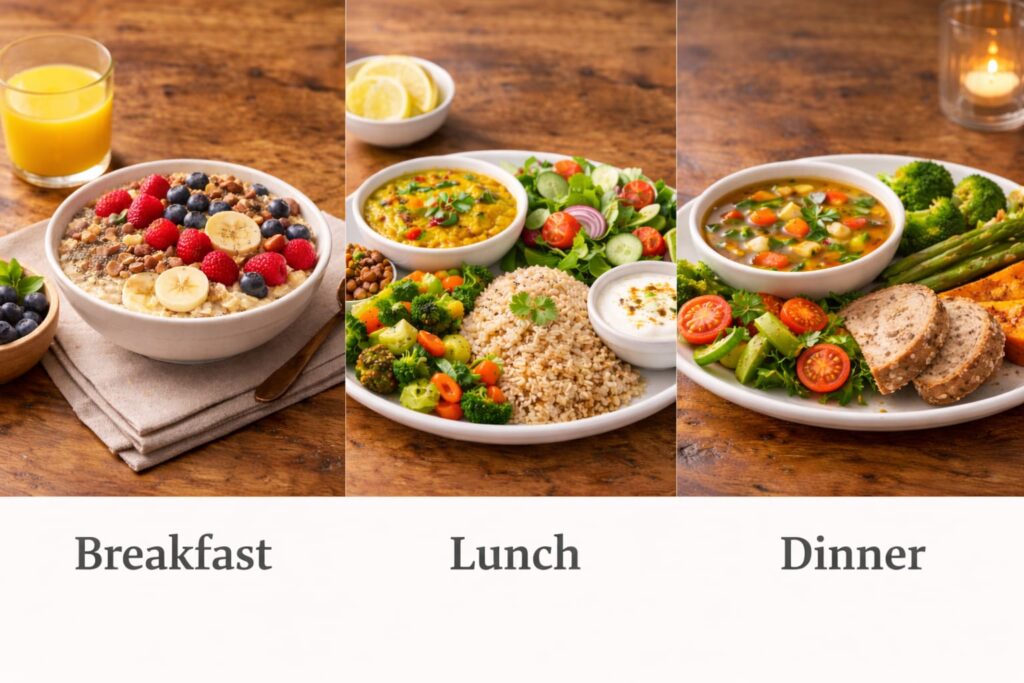
An anti-inflammatory diet meal plan is one of the most effective natural ways to reduce inflammation and protect your body from chronic health issues. What you eat every day plays a major role in how your body feels, heals, and functions. The right meals can calm inflammation, improve digestion, reduce pain, and support overall well-being.
In this guide, you will learn what an anti-inflammatory diet meal plan is, why they matter, and how to include them easily in your daily life – without complicated rules or expensive foods.
Table of Contents
What is an Anti-Inflammatory Diet Meal Plan?
An anti-inflammatory diet meal plan consists of whole, natural foods that support the body’s ability to fight inflammation. Inflammation is a normal response to injury or infection, but chronic inflammation can damage tissues and lead to diseases like:
- Diabetes
- Obesity
- Heart disease
- Digestive disorders
- Hormonal imbalance
- Arthritis
An anti-inflammatory diet meal plan helps lower this silent inflammation and keep your body balanced.
Why is Chronic Inflammation Harmful?
When inflammation stays in the body for a long time, it can cause:
- Joint pains
- Gut problems
- Weak immunity
- Mood swings
- Skin problems
Eating the right meals daily can naturally reduce these risks.
Core Principles of an Anti-Inflammatory Diet Meal Plan
- Eat more whole, unprocessed foods
- Include fibre-rich foods
- Choose healthy fats
- Reduce sugar and refined carbs
- Avoid packaged and fried foods
Sample Anti-Inflammatory Diet Meal Plan
Best Breakfast Options
- Oats with fruits and nuts
- Millet idle or dosa
- Vegetable omelette cooked in olive oil
- Smoothie with berries, spinach, flaxseeds
Why it helps:
These meals provide fibre, antioxidants, and healthy fats that calm inflammation.
Lunch: should be nourishing, not heavy
- Brown rice with dal and vegetable curry
- Grilled fish with vegetables
- Quinoa bowl with beans
- Roti with veg curry and curd
Why it helps:
Whole grains and vegetables reduce gut inflammation and improve digestion.
Dinner: Light & healing meals
Dinner should be easy to digest.
- Vegetable soup
- Steamed vegetables with paneer
- Khichdi made with millets
- Stir-fried vegetables with olive oil
Why it helps:
Light meals prevent nighttime inflammation and support better sleep.
Best Anti-Inflammatory Foods to Include in Meals


| Food Category | Food Examples | Key Nutrients | Benefits |
|---|---|---|---|
| Fatty fish | Salmon, sardines, and mackerel are rich in omega-3 fats | Omega-3 fatty acids | 1. Improve heart and brain health. 2. Reduce joint inflammation. |
| Green leafy vegetables | Spinach, kale, methi, broccoli | Antioxidants, fibre | 1. Fight oxidative stress. 2. Support gut and liver health |
| Healthy fats | Mustard oil, olive oil, groundnut oil (cold-pressed) | Monounsaturated fats | 1. Improve heart health. 2. Reduce inflammatory markers. |
| Nuts & seeds | Almonds, walnuts, chia seeds, flaxseeds, pumpkin seeds | Vitamin E, omega-3, fibre | 1. Support hormone balance. 2. Reduce inflammation. |
| Legumes & pulses | Lentils, chickpeas, beans | Plant protein, fiber | Supports gut bacteria. |
| Fruits | Berries, apples, papaya, pomegranate, oranges | Vitamin C, antioxidants | 1. Strengthen immunity. 2. Protect cells. |
Source: National Institutes of Health (NIH)
Tip: Combine multiple anti-inflammatory foods in one meal (e.g., brown rice, dal, vegetables, and curd) for better results.
Spices That Strengthen Anti-Inflammatory Diet Meals
Indian spices are powerful anti-inflammatory agents. Add these spices regularly to your meals to reduce inflammation.
- Turmeric – reduces inflammation and pain
- Garlic – boosts immunity
- Cinnamon – controls blood sugar
- Ginger – supports digestion
Foods That Increase Inflammation
To make anti-inflammatory diet meals effective, reduce the following foods that trigger inflammation and harm gut health.
- Refined flour
- White sugar
- Deep-fried foods
- Packaged snacks
- Excess salt
- Sugary drinks
Lifestyle Habits That Support an Anti-Inflammatory Diet
- Food works best with healthy habits:
- Stay hydrated
- Sleep 7-8 hours daily
- Exercise or walk daily
- Adopt yoga and meditation to manage stress
Who Should Follow an Anti-Inflammatory Diet?
People with:
- Arthritis or joint inflammation
- Diabetes
- PCOS/PCOD
- Gut disorders
- Heart patients
- Anyone aiming for long-term health
Simple Tips to Start Today
- Start with one meal change at a time
- Eat homely food
- Eat seasonal fruits and vegetables
- Read labels
- Stay consistent
Conclusion
An anti-inflammatory diet is not a short-term plan – it’s a lifestyle choice. By following an anti-inflammatory diet meal plan, avoiding processed foods, and following healthy habits, you can reduce inflammation, prevent disease, and feel energetic every day. Small daily choices can lead to long-lasting health and happiness.